Wine Bar Near Empire State Building: Plan Your AYZA Visit
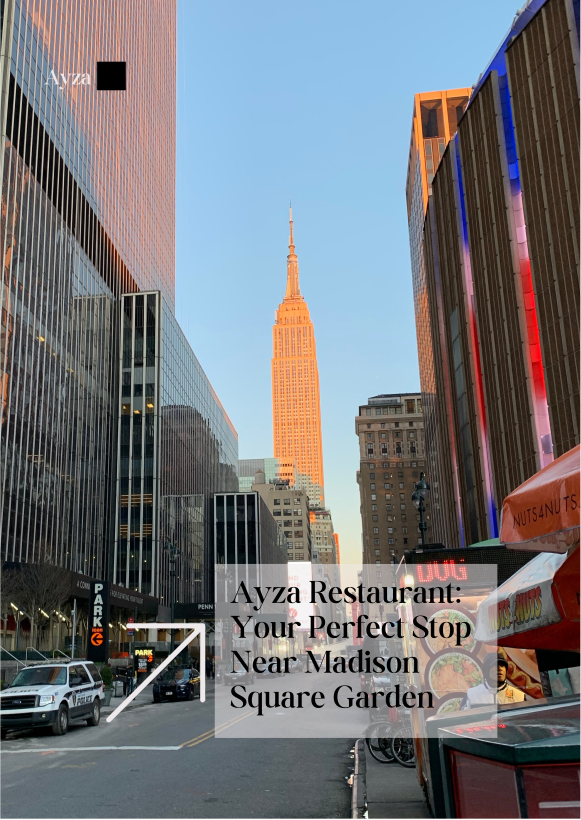
AYZA Wine & Chocolate Bar is a four minute walk from the Empire State Building. Here is the route, what...
Ayza Wine Bar NYC | Wine & Chocolate Bar in Midtown Manhattan


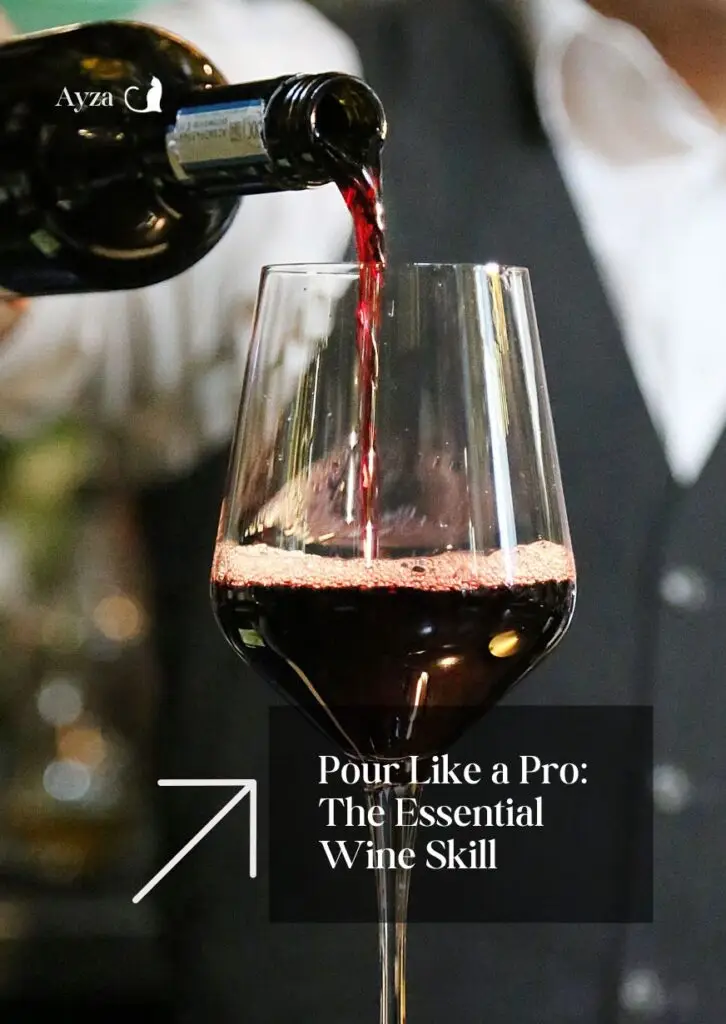
Nobody teaches you how to pour wine. You watch someone do it badly, copy it, and then spend years dripping Cabernet on a tablecloth and wondering why the sparkling foams over the rim. It takes about four minutes to learn properly, and the difference shows immediately, whether you are hosting six people at home or handing a glass to one person across a table.
Quick answer: Hold the bottle low on the body with the label facing the guest, pour to the widest part of the bowl, about a third full or five ounces, then twist the bottle a quarter turn as you lift to stop the drip. For sparkling, tilt the glass and pour down the side in two goes. Serve guests before yourself, working clockwise, and stop at every glass rather than sweeping across.
Three checks, all of which take seconds and all of which are more important than technique.
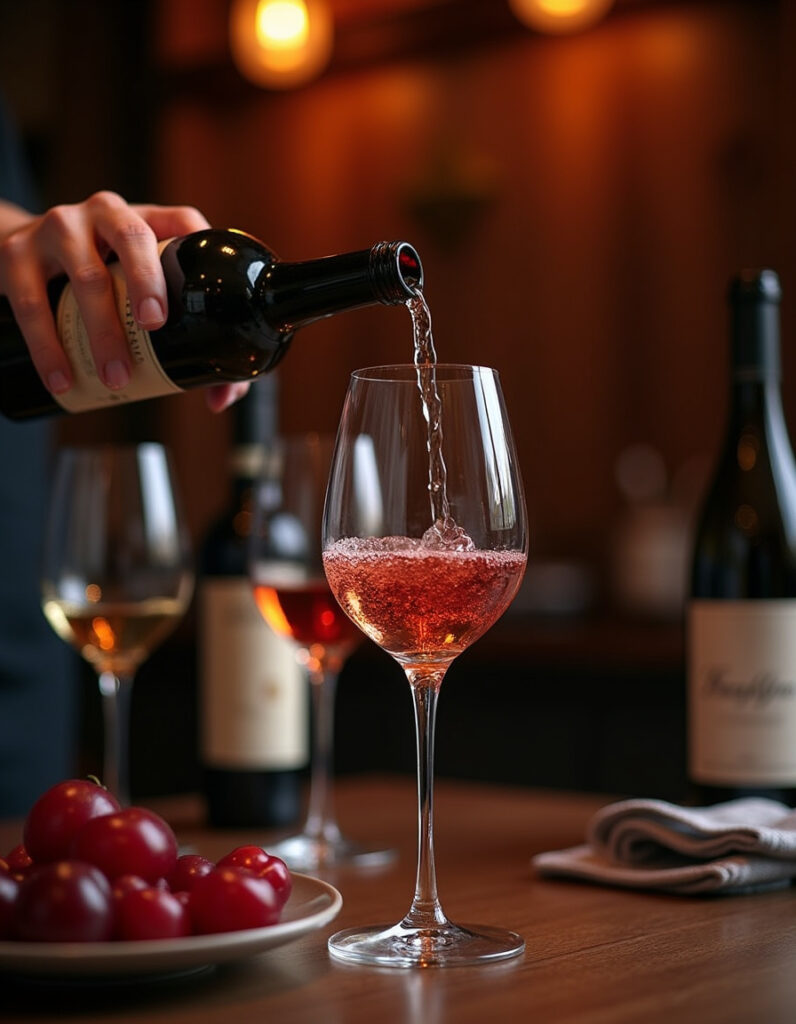
Less than instinct suggests. Fill to the widest part of the bowl and stop, which is roughly a third of most glasses. The space above the wine is not wasted; it is where the aroma collects, and aroma is most of what you taste.
| Situation | Pour | Why |
|---|---|---|
| Standard glass of wine | About 5 oz | Five pours from a standard bottle |
| Tasting flight | 3 oz | Enough to judge, small enough to compare several |
| Large bowled red glass | 5 oz, looks less | Fill to the widest point, not to a line |
| Sparkling flute | Two thirds | Poured in two goes so the foam settles |
| Dessert or fortified wine | 2 to 3 oz | Higher alcohol and sweetness, smaller serve |
A standard 750 ml bottle gives five glasses at five ounces. Useful when you are working out how many bottles a dinner needs: two bottles covers four people comfortably across an evening.
As you finish pouring, rotate the bottle a quarter turn clockwise while lifting it away. The rotation pulls the last drop back around the lip instead of letting it run down the side of the bottle and onto the table.
It feels awkward for about three attempts and then becomes automatic. If you are pouring for a group, keeping a folded napkin in your other hand and touching it to the lip between pours is the belt and braces version. Red wine on a white tablecloth is the reason both of these exist.
Sparkling is a different job because the foam will beat you if you pour it like still wine. Two changes solve it.
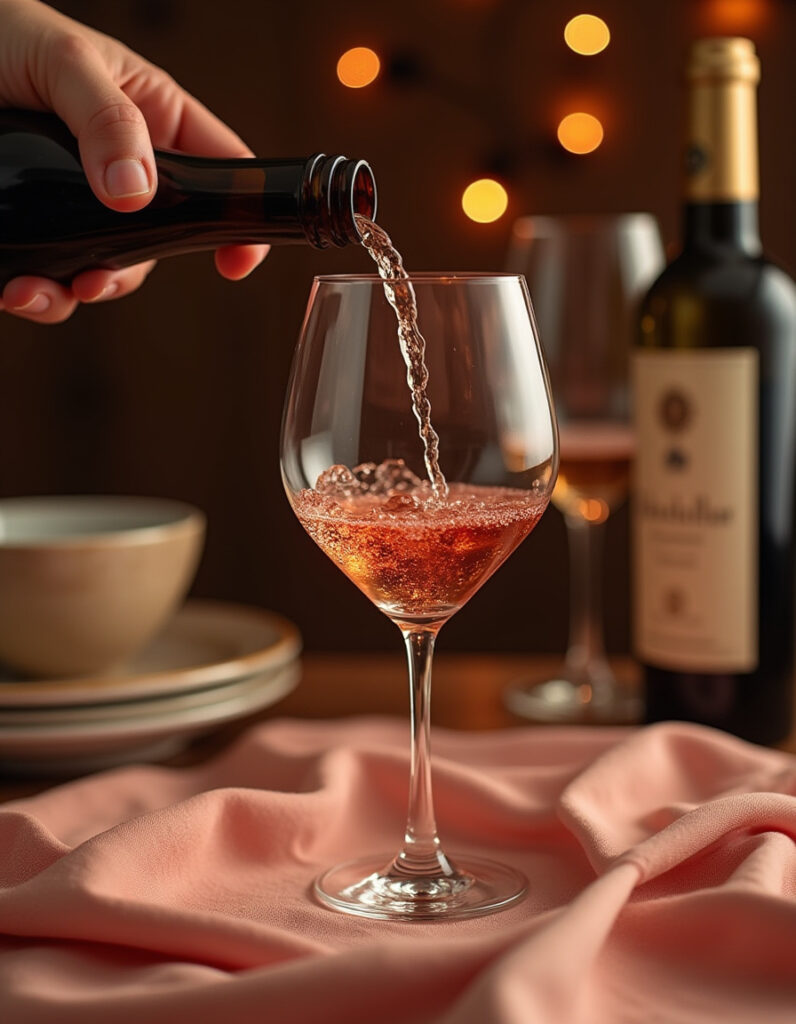
First, tilt the glass and pour down the inside wall rather than into the middle. The wine slides instead of crashing, so it foams less and keeps its bubbles. Second, pour in two goes: fill about a third, wait a few seconds for the foam to fall, then top up to around two thirds.
Opening matters as much as pouring. Chill the bottle properly, keep a thumb over the cork while you loosen the cage, hold the bottle at 45 degrees away from everyone, and turn the bottle rather than the cork. A soft sigh keeps the pressure in the bottle; a bang sends it into the room along with a good measure of the wine.
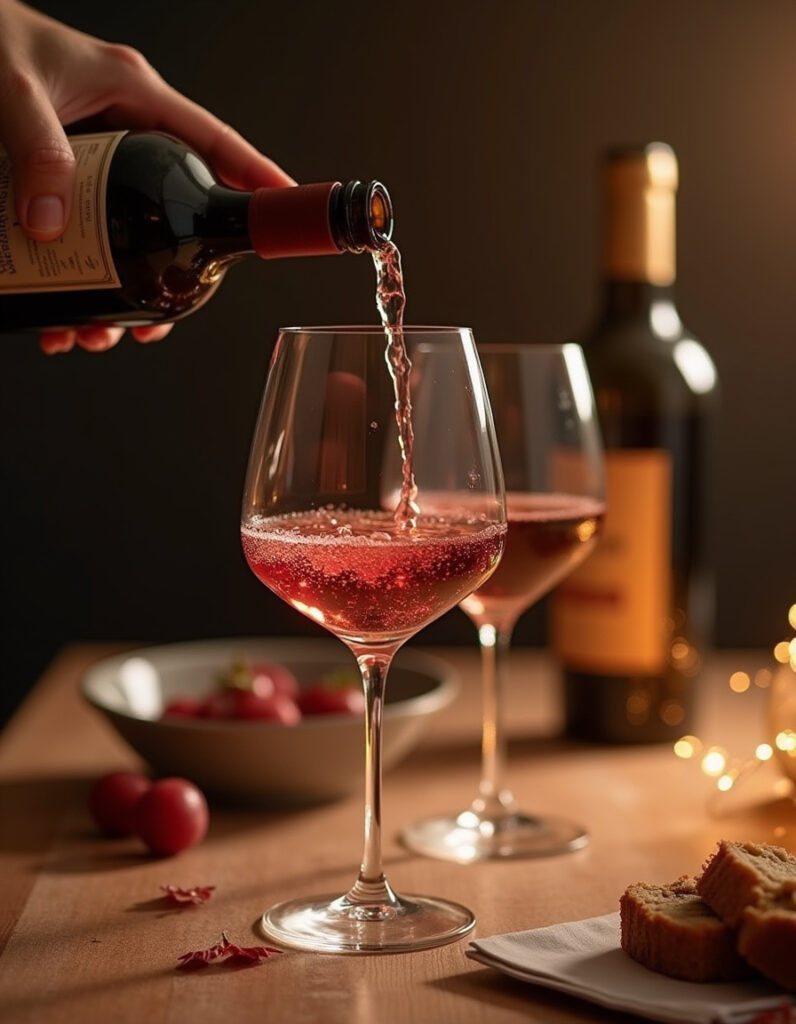
The etiquette is simple and mostly about order. Pour a small taste for whoever chose the bottle if you are the host and it is a bottle worth checking. Then serve guests before yourself, working around the table in one direction so nobody is missed and nobody is served twice.
Pour from the right where you can, stop fully at each glass rather than sweeping the bottle across the table, and keep the pours even so nobody is counting. Ask before topping up rather than refilling automatically; a guest pacing themselves, driving, or not drinking should not have to cover their glass with a hand. If someone is not drinking alcohol, pour their drink at the same time as everyone else’s, not afterwards.
Between two different wines, offer fresh glasses if you have them. If you do not, a small rinse with a little of the new wine, swirled and discarded, is better than pouring a Cabernet into the remains of a Riesling.
| Problem | Cause | Fix |
|---|---|---|
| Wine runs down the bottle | No twist at the end of the pour | Quarter turn as you lift; wipe the lip first |
| Sparkling foams over | Poured into the middle of an upright glass | Tilt the glass, pour down the side, in two goes |
| Cork crumbles | Dry cork from upright storage, or an old bottle | Push through and decant through a fine strainer |
| Sediment in the glass | Bottle disturbed before pouring | Stand it upright for a day, decant slowly |
| Wine tastes flat | Too cold, or the glass is too full | Warm slightly in the hand, pour less |
| Wine tastes hot and alcoholic | Served too warm | Fifteen minutes in the fridge |
Several of these overlap with the wider list in our guide to common wine mistakes, which covers storage, decanting and how long an opened bottle really lasts.
To the widest part of the bowl, about a third full, which is roughly five ounces. The empty space above the wine holds the aroma, and you need room to swirl.
Twist the bottle a quarter turn as you lift it away at the end of the pour. Wiping the lip of the bottle before you start helps as well.
Tilt the glass and pour down the inside wall rather than into the middle, and do it in two goes: a third first, then top up once the foam settles.
Five at a standard five ounce pour from a 750 ml bottle. Tasting flights use three ounce pours, so a bottle gives eight.
By the body, low down. You get more control over the angle, and your hand is not warming the wine at the shoulder of the bottle.
Guests before yourself, working around the table in one direction so nobody is missed. Ask before topping up rather than refilling automatically.
Watching someone pour properly teaches it faster than reading about it. Order a $33 flight from the wine list and pay attention to the three ounce pours, or book a guided tasting class where the service is part of the hour.
Serving sizes and temperatures are general guidance. Prices and tasting formats were checked against ayzanyc.com on September 9, 2026.