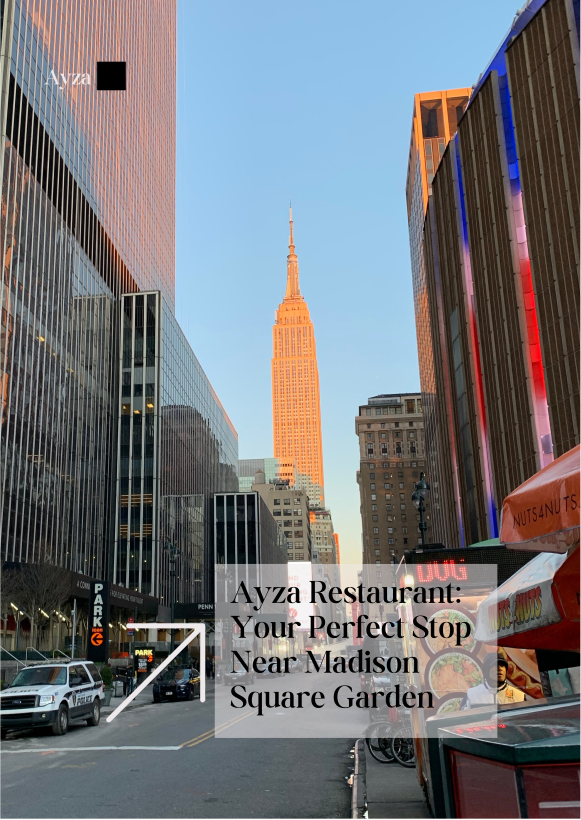
Wine Bar Near Empire State Building: Plan Your AYZA Visit
AYZA Wine & Chocolate Bar is a four minute walk from the Empire State Building. Here is the route, what...
Ayza Wine Bar NYC | Wine & Chocolate Bar in Midtown Manhattan


Almost every guide to how to open a restaurant in NYC starts with the menu and the concept. That is the enjoyable part and it is not what decides whether you open. What decides it is a stack of permits, a lease you signed before you knew what the space would let you do, and a liquor licence that takes longer than your landlord is willing to wait.
This is the order the process actually runs in, written from the perspective of the constraints rather than the dream. We have been operating in Midtown since 2007, so the sequencing here is the part we would want somebody to tell us again.
Quick answer: Verify the space before you sign anything: zoning, lawful use, certificate of occupancy, ventilation, and whether a liquor licence is even possible at that address. Then form the entity, get the tax and health permits, and start the State Liquor Authority application early, because it is the longest pole. Build after the permits, not before. Budget for several months of rent with no revenue.
The single most expensive mistake in this business is signing a lease for a space that cannot legally become the restaurant you have in mind. Rent starts on signature. Permits do not care.
Have an expeditor or an architect who works in the city walk the space before you sign, and negotiate a lease contingency on obtaining the permits you need. Landlords resist it. Ask anyway, because the alternative is paying rent on a space you cannot open.
Form the business entity, get a federal employer identification number, open the bank account, and register with New York State for sales tax. You need a Certificate of Authority to collect sales tax before you make a single sale, and the state tax department explains what that involves.
On the money, the number that catches people out is not the build cost. It is the gap: the months between the day rent starts and the day revenue starts, plus the months after opening before the room is busy. Budget for both, and budget for the liquor licence arriving later than you planned, because that changes your revenue model significantly.
Also unglamorous and non optional: workers compensation and disability insurance, general liability, and liquor liability once you are licensed. Music licensing too, if you intend to play recorded music.
| Agency | What it covers |
|---|---|
| Health department | Food Service Establishment permit, food protection certificate for a supervisor on duty, inspections and letter grading |
| Department of Buildings | Construction and alteration permits, certificate of occupancy, place of assembly where occupancy requires it |
| Fire department | Permits tied to cooking equipment, suppression systems and place of assembly |
| Environmental protection | Grease interceptor and waste requirements |
| Consumer and worker protection | Sidewalk signage and certain business licences |
| Transportation | Outdoor dining licence for sidewalk or roadway seating |
| State Liquor Authority | On premises alcohol licence |
| State tax department | Certificate of Authority for sales tax |
The city publishes a step by step overview for opening a restaurant and an industry checklist through NYC Business. Requirements and fees change, so treat those as the source and this page as the map.
If you are selling alcohol, this is the longest item on your timeline and it is not close. New operators routinely plan for a few weeks and lose several months, and a restaurant with a bar that cannot serve is a restaurant running on a fraction of its intended margin.
Three things drive the delay. The application itself is document heavy and requires the lease, the diagram of the premises, financing disclosure and personal information for every principal. There is a notice period to the local community board before filing, and community board opinion carries real weight. And proximity rules apply: the presence of other on premises licences within a set distance, or a school or place of worship nearby, can complicate or prevent an application entirely.
Practical advice. Check the address for proximity issues before you sign the lease, not after. Attend the community board meeting yourself rather than sending a lawyer alone. Answer every request for information the same week it arrives, because incomplete applications sit. And read the State Liquor Authority guidance on becoming a licensed retailer and the current fee chart before you build a financial model around a date.
Work has to be filed and permitted before it is done, and inspected after. Building first and filing later is how a project acquires violations, a stop work order and a rebuild, in that sequence.
Hire an expeditor. It feels like an avoidable cost until the first time a filing is rejected on a technicality and you lose six weeks. In this city it is closer to a required role than an optional one.
| The mistake | What it costs | The fix |
|---|---|---|
| Signing a lease before use and ventilation are verified | The whole project, sometimes | Diligence and a permit contingency in the lease |
| Starting the liquor application late | Months of trading without a bar | Begin it as early as the lease allows |
| Building before permits are issued | Stop work orders, violations, rebuilds | File first, always |
| Underestimating the pre revenue period | Running out of money before opening | Budget more months of rent than feels necessary |
| Ignoring the community board | Opposition at exactly the wrong moment | Attend, listen, address concerns directly |
| No certified food protection supervisor ready | Delay at the health inspection | Get someone certified during the build |
Steps four and five overlap deliberately. The licence timeline is the one you cannot compress, so it should be running while everything else happens.
Three things, none of them about food.
First, pick one thing to be known for and build the menu around it. A restaurant that does everything competently is harder to remember than one that does a specific thing well. For us that turned out to be chocolate made in house, paired with wine, which is still what people describe when they explain the place to a friend nineteen years later.
Second, the room matters more than the fit out budget suggests. Acoustics, lighting and whether people can hear each other decide whether a guest returns, and none of those are the most expensive lines in a build. A ceiling worth describing is worth more than another few covers.
Third, plan for slow months rather than being surprised by them. Every restaurant in this city has a January. The businesses that survive are the ones that budgeted for it. If you want to see how one Midtown room approached all three, our guide to the best wine bars in New York describes it from the guest side.
Requirements, fees and processing times change, and nothing on this page is a substitute for the agencies themselves or for professional advice. Use the city health department guidance on opening a restaurant, the NYC Business industry checklist, and the State Liquor Authority pages linked above as your primary sources, and work with an architect, an expeditor and a lawyer who do this in New York regularly.
Knowing how to open a restaurant in NYC is mostly knowing what order to do things in, and starting the slowest item first.
This page is general information from an operator, not legal, financial or licensing advice. Requirements, fees and timelines are set by city and state agencies and change; verify everything against the official sources linked above. Last reviewed September 9, 2026.