Wine Bar Near Empire State Building: Plan Your AYZA Visit
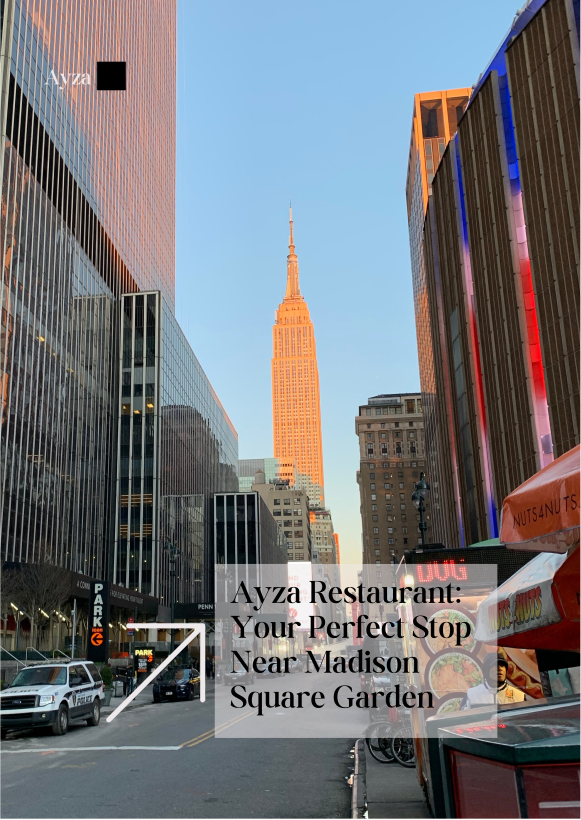
AYZA Wine & Chocolate Bar is a four minute walk from the Empire State Building. Here is the route, what...
Ayza Wine Bar NYC | Wine & Chocolate Bar in Midtown Manhattan


The awkward thing about corporate party etiquette is that nobody tells you the rules, and yet everyone notices when you break them. A work party is not a party you happened to be invited to. It is the workplace with music, and the people watching are the same people who will be in your meetings on Monday.
Ten rules, ordered by how much damage getting them wrong actually does.
Quick answer: Go, arrive on time and stay at least an hour. Dress one step above the office. Keep your drinking below the room average. Talk to people outside your team. Do not photograph anyone without asking. Avoid gossip and complaints entirely. Leave before the room turns. Thank the organiser the next morning.

Attendance is noticed more than behaviour at these things. Skipping the annual party without a reason reads as disengagement whether or not you meant it that way, and it costs you the one evening in the year where you meet people from other teams without a calendar invitation.
If you genuinely cannot make it, tell the organiser directly, early, and give a reason. That takes thirty seconds and is the difference between an absence and a no show. Answer the RSVP either way, including the dietary and drink preference fields, because somebody is counting.
Turning up at the stated time is a small courtesy that lands well, because the first twenty minutes of a party are the most awkward for the organiser and the easiest for you to make better. Fashionably late is a social convention that does not transfer to work events.
An hour is the minimum stay for it to count as attending. Anything shorter reads as an appearance. If you have a hard stop, mention it when you arrive rather than disappearing, and say goodbye to the host on the way out.
The reliable rule, because it is relative rather than absolute and survives every change in workplace dress codes. If the office is business casual, wear the smarter end of it. If it is genuinely casual, add a jacket or the equivalent.
Two practical checks. If the invitation states a dress code, follow it rather than interpreting it, and if you are unsure, ask the organiser, which is a completely normal question. And check whether any part of the evening is outdoors, because a heated garden in November is still a garden.
This is the rule that causes the most damage when broken, and the only one on the list that can end a career. The safe approach is simple: notice roughly where the room is and stay just below it.
Three tactics that make it easy. Eat before or early. Alternate with water without announcing it. And hold something so nobody offers you another; a properly made non alcoholic drink does this better than an empty glass. Two mocktails are on most decent menus now, and at AYZA the Floral Spritz and Midnight Bloom are $14 and made to order.
The other half of this rule is about other people. Never comment on what a colleague is or is not drinking, never press a refusal, and never top up a glass without asking. Somebody at that party is not drinking for a reason that is none of your business.
Standing with your own team all evening is the most common way to waste a work party. You already talk to those people. The value is in the twenty minutes with somebody from a department you email but have never met.
The opener does not need to be clever. Ask what they are working on, or what they think of whatever is in front of you both. Structured activities help enormously here, which is why so many companies now build an event around a tasting or something similar: everyone is handed the same thing and asked what they think, which is a far lower barrier than open networking.
One more: if you see somebody standing alone, go and stand with them. It is the single most useful thing anyone does at these events.
A photograph taken at a work party can be seen by anyone, forever, including people who were not there. Ask before you take one, ask again before you post it, and delete it if somebody asks you to, without negotiating.
Particular care with anything that shows a colleague holding a drink, and with group shots that half the group has not seen. If the company has an official photographer, let them do the work, and assume the images may be used internally.
The relaxed atmosphere and the drink combine to make people say things they would not say in a meeting. That combination is why work parties generate more workplace problems than any other event in the calendar.
Two things to keep out of the evening entirely: complaints about specific colleagues, and confidential information about clients, deals or restructures. A party is a public room, and nothing said in it is off the record. If someone raises a genuine grievance with you, listen and suggest a proper conversation on a working day rather than getting into it.
The same applies to salary and career negotiation. Cornering a senior person at a party to discuss your promotion is the most reliable way to make both of you uncomfortable.
If you are speaking, keep it short, thank people by name, avoid inside jokes that exclude half the room, and never make anyone the subject of a joke they have not agreed to. Two minutes is plenty. Four is too long.
If you are listening, stop your conversation, put your phone away and face the speaker. And if you are organising, put the speech after the main course rather than during a course, because people will either eat and not listen or listen and eat cold food.
Every work party has a point where the character of the evening changes. Nothing good for your reputation happens after it, and the people who stay are rarely the ones telling the story afterwards.
Decide your finish time before you arrive and stick to it. Say goodbye to the host and to whoever you have been talking to, rather than vanishing. And if you are junior, note that leaving before the most senior person in the room is no longer a rule anybody enforces.
Somebody spent weeks on the venue, the menu, the dietary list and the budget, and almost nobody thanks them. A two line message the next morning is remembered for a year.
Mention one specific thing rather than sending a generic note. And if something went wrong on the night, do not raise it in that message; raise it later, privately, and only if it is genuinely useful for next time.
A guided wine tasting is a reliable way to provide that structured element: one hour, from $59 per person, with minimums of six or eight guests. Private events at AYZA start at $69 per person and hold up to 20 seated or 40 standing. There is more on the room in our guide to the best wine bars in New York, and enquiries go through the contact page.
You are not obliged, but attendance is noticed more than behaviour. If you cannot make it, tell the organiser directly and early with a reason rather than simply not appearing.
At least an hour for it to count as attending. Arrive at the stated time, since the first twenty minutes are the most awkward for the organiser and the easiest to improve.
One step above your normal office standard. If the invitation states a dress code, follow it. Check whether any part of the evening is outdoors before deciding.
Below the room average. Eat early, alternate with water, and hold a non alcoholic drink so nobody offers you another. Never comment on what anyone else is drinking.
Ask before taking one, ask again before posting it, and delete it if someone asks. Be especially careful with photographs showing colleagues holding drinks.
Complaints about specific colleagues, confidential client or company information, and your own salary or promotion. A party is a public room and nothing said in it is off the record.
Good corporate party etiquette is mostly the host removing friction in advance: a bounded evening, a room people can talk in, a structured start and a bar arrangement decided before anyone arrives.
Most of this is ordinary etiquette applied to a room where the people around you are also colleagues.
Venue prices, formats and capacities were checked against ayzanyc.com on September 9, 2026. Etiquette conventions vary by industry and culture; read the room you are in.