Wine Bar Near Empire State Building: Plan Your AYZA Visit
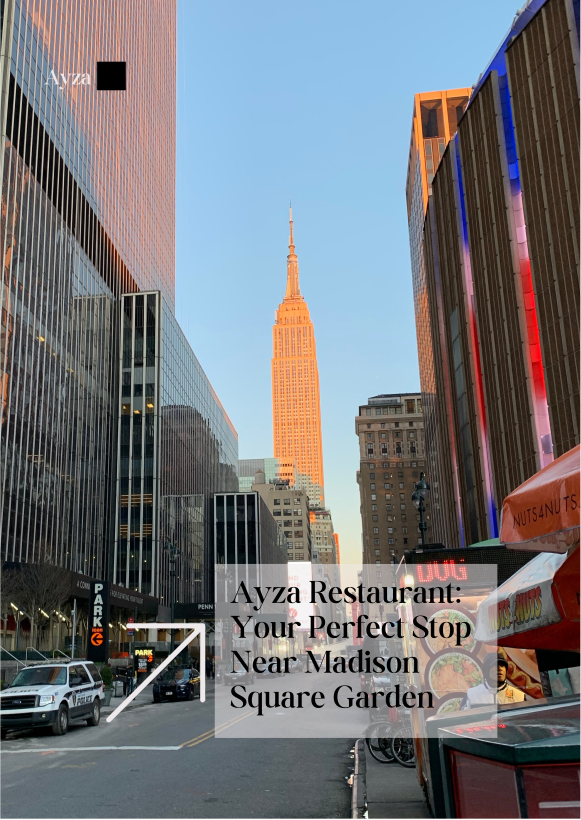
AYZA Wine & Chocolate Bar is a four minute walk from the Empire State Building. Here is the route, what...
Ayza Wine Bar NYC | Wine & Chocolate Bar in Midtown Manhattan


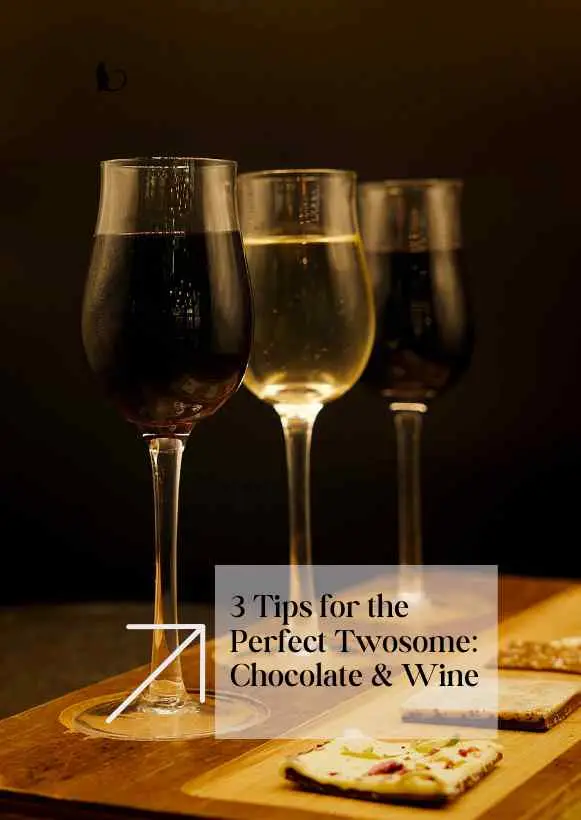
Learning how to pair wine and chocolate takes about five minutes, because there are only three rules that matter and the first one does most of the work. Everything else is refinement. Get the first rule wrong and no amount of expertise will save the pairing; get it right and even a guess usually works.
Quick answer: Rule one, the wine must be at least as sweet as the chocolate. Rule two, match intensity so neither side overwhelms the other. Rule three, taste in order, lightest to darkest, and let the chocolate melt before you sip. White chocolate wants Moscato or Riesling, milk wants port, dark at 70 percent and above wants Cabernet Franc, Malbec or Bordeaux.
Cheese is easy to pair because it brings fat and salt, and wine handles both well. Chocolate brings three things at once that wine finds harder: sugar, bitterness from the cocoa solids, and fat from the cocoa butter that coats the palate and blunts whatever comes next.
Each one causes a specific problem. Sugar in the food makes a dry wine taste sour and thin. Bitterness stacks on top of tannin and makes a big red taste harsh. And the fat film means the wine has to work harder to register at all. The three rules below exist to solve those three problems in order.
This is the rule, and the other two are adjustments to it. If the chocolate is sweeter than the wine, your palate reads the wine as sour, thin and stripped of fruit. It is not a preference; it is how sweetness recalibrates everything tasted after it.
The practical consequence is that a dry red with a sweet milk chocolate, which is what most people reach for, is close to the worst possible combination. Swap the wine for a ruby port and the same chocolate works immediately, because the port has sweetness of its own to hold its ground.
If you are unsure how sweet a wine is: anything labelled port, Moscato, late harvest or ice wine certainly has residual sugar, and an alcohol level under about 12 percent often indicates some. Dry reds and crisp whites have essentially none.
People try to match flavours, hunting for a berry note in a wine to go with a berry filling. That is the hard route and it rarely decides anything. Matching weight does.
Think of it as volume. A delicate white chocolate next to a big Malbec is not a pairing, it is a wine with a distraction beside it. An 80 percent dark chocolate next to a light Pinot Grigio erases the wine completely. Both sides should be playing at roughly the same level, and if they are, the flavour details take care of themselves.
One useful corollary: with a filled bonbon, pair with the filling rather than the shell. A dark shell around a passion fruit centre behaves like a fruit dessert, not like dark chocolate, and wants a rosé or a sparkling rather than a red.
Two halves. First, taste in order: white chocolate, then milk, then dark, then anything above 70 percent, with the wines running sparkling to white to rosé to red to fortified. One square of very dark chocolate at the start will flatten everything that follows it, and you will spend the rest of the evening wondering why nothing else tastes of anything.
Second, let the chocolate melt. Cocoa butter releases its flavour at body temperature, and chewing skips almost all of it. Put a small piece on your tongue, wait a few seconds, then take the wine. The pairing happens in the second or third second, not the first. Try one piece chewed and one melted and the difference is immediately obvious.
Water between pairs, not bread. It resets the palate more effectively and adds no flavour of its own.
| Chocolate | Cocoa | Pair with | Why it works |
|---|---|---|---|
| White | No cocoa solids | Moscato d’Asti, off dry Riesling, sparkling rosé | Sweetness against sweetness, no bitterness to fight |
| Milk | Around 30 percent | Ruby port, chocolate wine, off dry white | The wine needs residual sugar of its own |
| Dark | 60 to 70 percent | Cabernet Franc, Merlot, softer Bordeaux | Body without aggressive tannin |
| Very dark | 75 percent and up | Malbec, structured Bordeaux, ruby port | Enough weight to survive the bitterness |
| Fruit filled bonbon | Varies | Sparkling or still rosé | Acidity in the wine meets acidity in the filling |
| Caramel or salted caramel | Varies | Ruby port, off dry Riesling | Sweetness matched, salt handled |
If you learn one wine from this chart, learn Cabernet Franc. Medium bodied, savoury rather than jammy, with restrained tannin, it works across a wider range of dark chocolate than any other red. It is also the grape New York State does best.
Try the first one deliberately at home once. It teaches the sweetness rule permanently in a way that reading about it does not, and it costs one square of chocolate.
At AYZA in Midtown Manhattan the flights are built chocolate first and wine second, which is the practical application of the rules above. Five are on the menu, all shared for the table rather than priced per person.
| Flight | Price | Rule it demonstrates |
|---|---|---|
| Whiteout | $29 | Sweetness matching, with Riesling and Moscato d’Asti |
| Rosé Experience | $42 | Acidity against fruit filled bonbons |
| NY Pairing Collection | $44 | Three New York wines with three house made chocolates |
| Milky Way | $44 | The full sweetness range, dry white through to port |
| Dark Magic | $53 | Intensity matching, four reds against very dark chocolate |
If you want more chocolate than a flight provides, the Sweet Treats menu has two fondues for two at $31 and $29, with a choice of Belgian milk, Belgian white or 70 percent Ecuadorian dark. For the guided version, tasting classes run one hour from $59 per person with minimums of six or eight guests. There is more on the room and the list in our guide to the best wine bars in New York.
The wine must be at least as sweet as the chocolate. If the chocolate is sweeter, the wine tastes sour and thin. Everything else is refinement on top of that.
A medium to full red with restrained tannin: Cabernet Franc, Merlot, Malbec or a softer Bordeaux. Above 80 percent cocoa, a ruby port handles it better than any dry red.
Something with residual sugar of its own, such as ruby port, a chocolate wine or an off dry white. A dry high tannin red is the classic mistake here.
Sweetness in food recalibrates the palate, so a wine drier than the food reads as sour and stripped of fruit. It is a physiological effect rather than a matter of taste.
Let it melt. Cocoa butter releases flavour at body temperature and chewing skips most of it. Melt for a few seconds, then sip; the pairing happens a moment later.
Chocolate from lightest to darkest, wine from sparkling through white, rosé and red to fortified. One very dark chocolate early will flatten everything after it.
Knowing how to pair wine and chocolate is three rules. Tasting a set that somebody has built around them is twenty five minutes. Order a flight, work left to right, and let the chocolate melt.
Flights, prices and class formats were checked against ayzanyc.com on September 9, 2026. Selections rotate, so ask what is pouring.