Wine Bar Near Empire State Building: Plan Your AYZA Visit
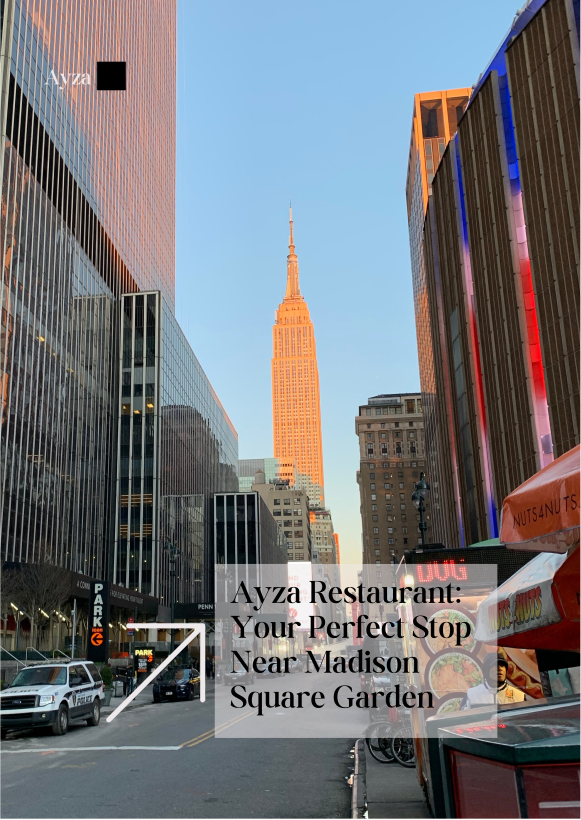
AYZA Wine & Chocolate Bar is a four minute walk from the Empire State Building. Here is the route, what...
Ayza Wine Bar NYC | Wine & Chocolate Bar in Midtown Manhattan


Most lists of 2026 event trends are written for people who already run large conferences. If you are organising a team dinner for twenty five, a client evening, or a birthday for forty, almost none of it applies. What follows is the version that does: what has actually changed in how people plan gatherings, and what to do about each one.
Quick answer: Gatherings are getting smaller and more frequent, budgets are tighter and scrutinised line by line, guests expect to participate rather than watch, and inclusive planning for non drinkers and dietary needs has moved from courtesy to baseline. Book earlier than you used to, ask for itemised quotes, and choose a format with structure built into it.
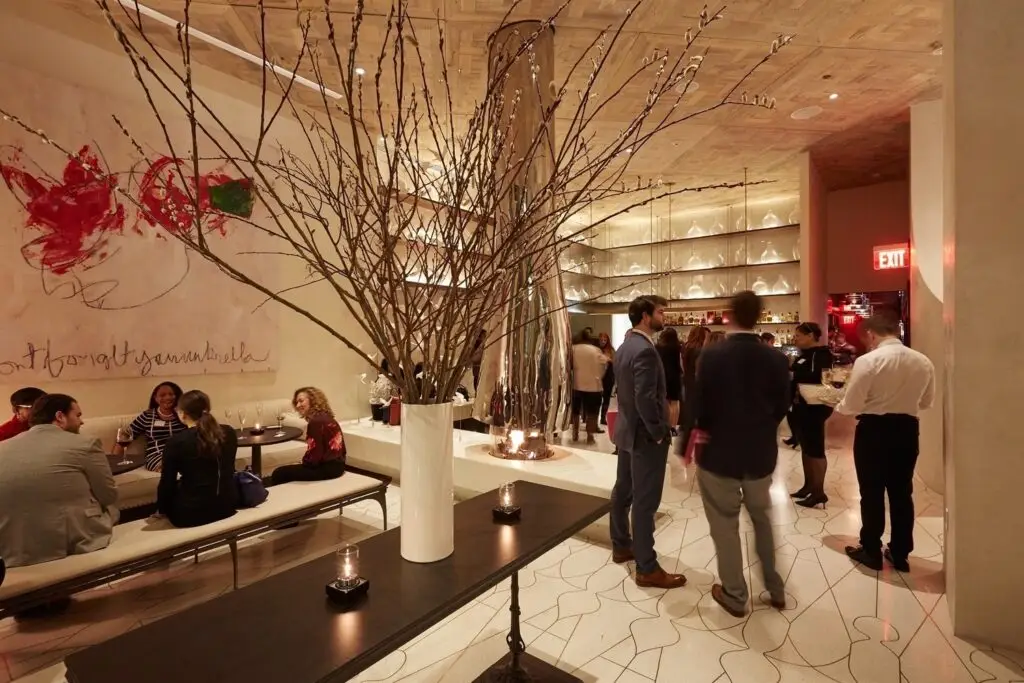
The annual set piece is losing ground to three or four smaller gatherings across the year. The logic is straightforward: a room of twenty five people produces real conversation, a room of two hundred produces a queue at the bar. For distributed teams, several smaller events also spread the travel cost and let more people attend at least one.
Practically, this changes the venue you should be looking for. A restaurant room that seats twenty and holds forty standing is now the shape most organisers need, rather than a hall that requires a hundred people to feel full. It also means you should be asking about minimum spend more carefully, because a large venue priced for large groups will quietly charge you for the empty space.
Event budgets are being approved line by line rather than as a total. That is not a reason to spend less; it is a reason to quote better. An itemised proposal gets approved. A single number gets questioned.
| Line | Ask the venue |
|---|---|
| Food and drink per person | Exactly what is included, and for how long |
| Service charge | The percentage, commonly 20 in New York |
| Tax | Whether it applies to the service charge too |
| Bar beyond the package | Open, limited or consumption tab, and the cap |
| Overtime | The hourly rate if you run past the window |
| Anything brought in | Cake, flowers, printing, décor, AV |
| Deposit and cancellation | Amounts, dates, and what is refundable when |
A reliable planning assumption in New York: the final invoice lands roughly 30 percent above the per person headline once tax and service are added, before anyone orders an extra round. Build that in from the first conversation rather than explaining it afterwards. For sector wide cost context, the meetings and events forecast published by American Express Global Business Travel is a reasonable place to start.
The clearest shift in the last few years is that guests expect to do something rather than watch something. A speech at a dinner is now the least memorable part of most evenings, and everybody knows it.
What works instead is an activity with a built in structure, because structure stops an evening drifting and gives people who do not know each other a subject. A guided tasting does this efficiently: everyone receives the same thing at the same time and is asked what they think of it, which is a far lower barrier than being told to network. Sessions like these run about an hour, and the useful detail is that the last fifteen minutes, after the structured part ends, is when the room actually becomes a group. Do not schedule speeches over it.

Alcohol free options, dietary requirements and physical accessibility have moved from things you accommodate on request to things you plan for before the invitation goes out. The distinction matters, because accommodating on request means asking someone to identify themselves in front of colleagues.
Good rooms in good locations book earlier than they used to, and the squeeze is worst from October to December. Three to four weeks is the working minimum for a restaurant private event. Six weeks gives you room to compare quotes rather than accepting the first one, and for a December date you should be enquiring in September.
One practical consequence: hold two dates while you compare venues rather than one. Most venues will hold a date informally for a few days, and it costs you nothing to ask.
The useful applications are unglamorous: drafting invitations, reconciling RSVP lists, building timelines, summarising quotes, checking a contract for the clauses you care about. All of that saves genuine hours.
What it does not do well is the judgment. Whether a room feels right, whether a guide can hold a group, whether your team would rather have a tasting or a dinner. Two rules worth adopting: never put guest personal data or dietary and medical details into a general purpose tool, and always have a person verify anything that reaches a guest with their name on it.
Headcount tells you who turned up, not whether it worked. Decide before the event what success looks like and how you will know, then ask a small number of questions afterwards while it is still fresh.
| Event purpose | Measure |
|---|---|
| Team mixing | How many people they spoke to that they did not know |
| Client entertaining | Follow up conversations in the two weeks after |
| Celebration | Whether guests stayed past the scheduled end |
| Any event | Would you come to the next one, and what would you change |
Three questions sent the next morning get answered. A ten question survey sent a week later does not.
The changes that hold are the ones that also save money or effort. Choosing a venue people can reach on public transport removes travel emissions and taxi reimbursements at the same time. Confirming a final guest count a week ahead reduces food waste and reduces your bill. Digital invitations and menus cut printing. Reusable décor beats single use, and costs less across three events.
Be careful with claims. If you are telling guests an event is sustainable, be specific about what you actually did rather than using the word on its own.
Put together, the trends point at a specific kind of event: modest in size, in a room with character rather than capacity, built around a structured activity, quoted transparently, and planned far enough ahead to have a choice of dates.
As a worked example, private events at AYZA in Midtown start at $69 per person and hold up to 20 seated or 40 standing, with menus that accommodate vegan, vegetarian and gluten free guests. A guided wine tasting can be added as the structured hour, running $59 to $89 per person with minimums of six or eight. Those are the sorts of numbers to hold other quotes against.
Smaller and more frequent gatherings, budgets approved line by line, activities guests take part in rather than watch, inclusive planning as a baseline, longer lead times, and measurement beyond headcount.
Three to four weeks is the minimum for a restaurant private event and six weeks is more comfortable. For dates between October and December, enquire in September.
In New York, assume roughly 30 percent above the per person headline once tax and a service charge of around 20 percent are added, before any extra drinks.
Anything with a built in structure. A guided tasting gives everyone the same thing to react to at the same time, which starts conversation faster than open networking.
Collect drink preference on the RSVP alongside dietary needs, confirm properly made non alcoholic options are included in the package, and brief the host to frame the evening around the experience.
Decide the purpose first, then measure against it: new connections made, follow up conversations, whether guests stayed late, and whether they would come again.
The most useful of the 2026 event trends is also the simplest: pick a format with structure, quote it transparently, and book it earlier than feels necessary. Send a date, a headcount range and a format, and ask for the proposal itemised.
Prices, capacities and formats were checked against ayzanyc.com on September 9, 2026. Industry cost context changes; check current forecasts before setting a budget.