Wine Bar Near Empire State Building: Plan Your AYZA Visit
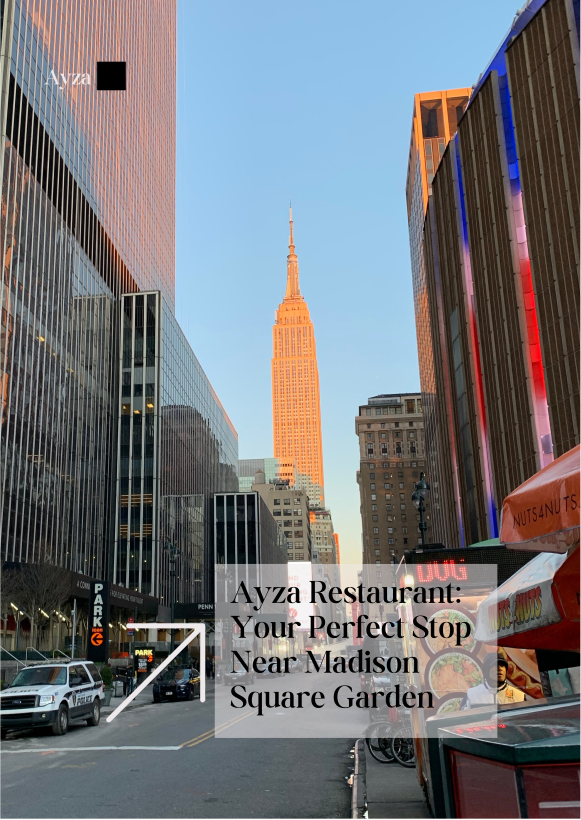
AYZA Wine & Chocolate Bar is a four minute walk from the Empire State Building. Here is the route, what...
Ayza Wine Bar NYC | Wine & Chocolate Bar in Midtown Manhattan


Most people who drink wine in New York City have never had a New York wine. That is a strange gap. The state grows grapes commercially across more than a dozen recognised regions, has been doing it since the 1800s, and is usually counted the third largest wine producing state in the country. It is just that almost none of it travels, so the only reliable way to taste it is to order it here.
This guide covers the regions worth knowing, the grapes the state actually does well, and how to taste them at AYZA Wine & Chocolate Bar in Midtown, where five of them are poured by the glass.
Quick answer: New York’s strongest wines are Finger Lakes Riesling and Cabernet Franc, Long Island Merlot and Chardonnay, and traditional method sparkling from cool sites. AYZA pours Dr. Konstantin Frank Grüner Veltliner, Brotherhood Riesling, Keuka Cayuco Brut, Keuka dry rosé and Bully Hill Cabernet Franc by the glass from $13 to $17, plus a $44 NY Pairing Collection with chocolates made in house.

The reputation problem is historical. For most of the twentieth century, New York planted native American grapes like Concord and Catawba, plus French American hybrids, because European vines were assumed to be unable to survive the winters. Those grapes make sweet, distinctly grapey wine that a lot of people met once and never went back to.
That assumption was overturned in the Finger Lakes in the 1950s and 60s, when Dr. Konstantin Frank demonstrated that European vinifera vines could be grown successfully by grafting them onto cold hardy rootstock. Almost everything worth drinking from New York today descends from that one insight. The state is a cool climate region, and cool climate is exactly where Riesling and Cabernet Franc do their best work.
| Region | What shapes it | Known for |
|---|---|---|
| Finger Lakes | Deep glacial lakes that hold heat and soften winters | Riesling, Cabernet Franc, sparkling |
| Long Island | Maritime climate, longest growing season in the state | Merlot, Cabernet Franc, Chardonnay, Sauvignon Blanc |
| Hudson River Region | The state’s oldest vineyards, mixed varieties and hybrids | Historic wineries, Cabernet Franc, hybrids |
| Lake Erie and Niagara | Lake moderated, large planted area | Riesling, hybrids, juice grapes |
Eleven long, narrow lakes gouged out by glaciers, some of them several hundred feet deep. That depth is the whole story: the water stores summer heat and releases it slowly through autumn, extending the ripening season and protecting the vines from the worst of the winter. Seneca, Cayuga and Keuka lakes carry the most plantings. If a New York wine surprises you, it is usually from here.
A completely different climate, closer to Bordeaux than to upstate New York. The North Fork in particular is surrounded by water on three sides, which gives it the longest growing season in the state and lets Merlot and Cabernet Franc ripen properly. Long Island reds are usually medium bodied and savoury rather than heavy, which makes them good food wines.
The oldest winegrowing area in the state and, at Brotherhood in Washingtonville, the home of a winery that describes itself as America’s oldest, founded in 1839. It is a short drive from the city, which makes it the easiest region to visit in a day. There is a full map of the state’s recognised growing areas on the New York Wines AVA guide.

Riesling is the flagship. New York Riesling tends to be high in acidity with citrus and orchard fruit, and it comes in everything from bone dry to properly sweet. Always check the label or ask, because dry and off dry Rieslings can look identical on a wine list.
Cabernet Franc is the red that has quietly become the state’s calling card. In a cool climate it ripens where Cabernet Sauvignon will not, and it gives a medium bodied, savoury wine with red fruit and a herbal edge rather than the jammy weight of a warm climate red. If you only try one New York red, make it this.
Sparkling wine is the quiet strength. High natural acidity is exactly what traditional method sparkling wine needs, and cool climate regions produce it without effort. Chardonnay, Gewürztraminer and Grüner Veltliner all appear too, the last of these grown by producers who noticed how well the Austrian grape suits the climate.
| Wine | Style | Glass / bottle |
|---|---|---|
| Keuka Cayuco Classic Brut | Sparkling, dry, crisp | $15 / $69 |
| Dr. Konstantin Frank Grüner Veltliner | White, dry, peppery and citrus | $17 / $61 |
| Brotherhood Riesling | White, fruit forward, high acidity | $17 / $61 |
| Keuka Dry Rosé | Rosé, dry, red berry | $13 / $47 |
| Bully Hill Cabernet Franc | Red, medium bodied, savoury | $16 / $59 |
Three of those producers carry real history. Dr. Konstantin Frank is the estate founded by the man who proved vinifera could grow in the Finger Lakes. Bully Hill sits above Keuka Lake in Hammondsport, at the historic centre of the region. Brotherhood, in the Hudson Valley, has been operating since 1839. The full list with international bottles alongside is on the cocktails and wines menu.

Tasting one New York wine tells you very little. Tasting three next to each other tells you what the region actually does, which is why a flight is the better first order.
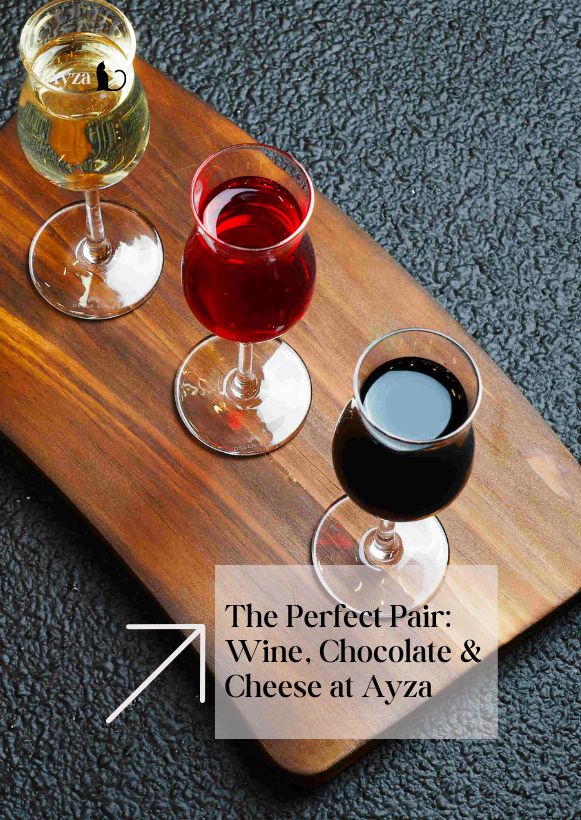
The $33 Wine Flight puts the Bully Hill Cabernet Franc directly against a Loire Sancerre and a Sonoma Pinot Noir. That comparison is the useful one, because it shows you where New York sits between old world restraint and new world ripeness. The $44 NY Pairing Collection goes the other way and keeps all three wines in state: the Cayuco Brut, the Cabernet Franc and a Riesling.
Taste in order, lightest to heaviest, sparkling first and red last. Write one line about each on your phone. A month later that line is the difference between remembering that you liked something and remembering what it was. For a longer version with a guide, tasting classes run one hour from $59 per person for booked groups.
High acidity is the common thread, and high acidity is friendly to food. It cuts fat, refreshes the palate and rarely overwhelms a dish. Practically, that means New York wines are easier to match than heavier warm climate bottles.
| Wine | From the menu |
|---|---|
| Cayuco Brut | Truffle Waffle Fries, Avocado Fritters, the Fromage Board |
| Grüner Veltliner | Classic Hummus Dip, Blue Cheese Caesar Salad |
| Riesling | Chicken Skewers with hoisin glaze, anything sweet and spicy |
| Dry Rosé | Watermelon and Mint Salad, White Truffle Pizza |
| Cabernet Franc | Braised Short Rib, Empire Steak Tartare, Maison Board |
Worth knowing: order either board from the dinner menu and any bottle of wine comes with 15 percent off, which makes trying a full bottle of something unfamiliar considerably easier to justify.

The NY Pairing Collection at $44 matches the three state wines with three chocolates made in house: a passion fruit white, a dark pistachio and a milk coconut. The logic is sweetness matching. The passion fruit white goes with the sparkling because both are light and acidic. The milk coconut goes with the Riesling because the wine has enough fruit sweetness to hold its own. The dark pistachio goes with the Cabernet Franc because a savoury red is one of the few things that survives a dark chocolate.
The rule underneath all three is that the wine must be at least as sweet as what you are eating. Break it and the wine tastes sour. Our three rules for pairing chocolate and wine covers the rest, and this short guide helps you pick between the flights.

Finger Lakes Riesling and Cabernet Franc above all, plus Long Island Merlot and Chardonnay and traditional method sparkling wine. The common thread is cool climate acidity.
The Finger Lakes produce the state’s most distinctive wines because deep glacial lakes moderate the climate. Long Island has the longest growing season and makes the most Bordeaux like reds.
AYZA at 11 West 31st Street pours five by the glass, from $13 to $17, and offers a $44 NY Pairing Collection with three New York wines and three chocolates made in house.
Not necessarily. Older plantings of native and hybrid grapes made sweet wine, but most quality production today is dry. Riesling comes in every level from bone dry to sweet, so ask before ordering.
Medium bodied and savoury, with red fruit and a herbal edge rather than the weight of a warm climate red. It ripens reliably in cool climates, which is why New York does it well.
Commercial winegrowing dates to the 1800s. Brotherhood in the Hudson Valley, founded in 1839, describes itself as America’s oldest winery and is poured at AYZA.
You do not need to drive four hours to try New York wines. Five of them are open by the glass in Midtown from 4 pm, and a flight puts three of them next to each other in twenty minutes.
Producers, prices and hours were checked against ayzanyc.com on September 9, 2026. Wines by the glass rotate, so ask what is open on the night.