Wine Bar Near Empire State Building: Plan Your AYZA Visit
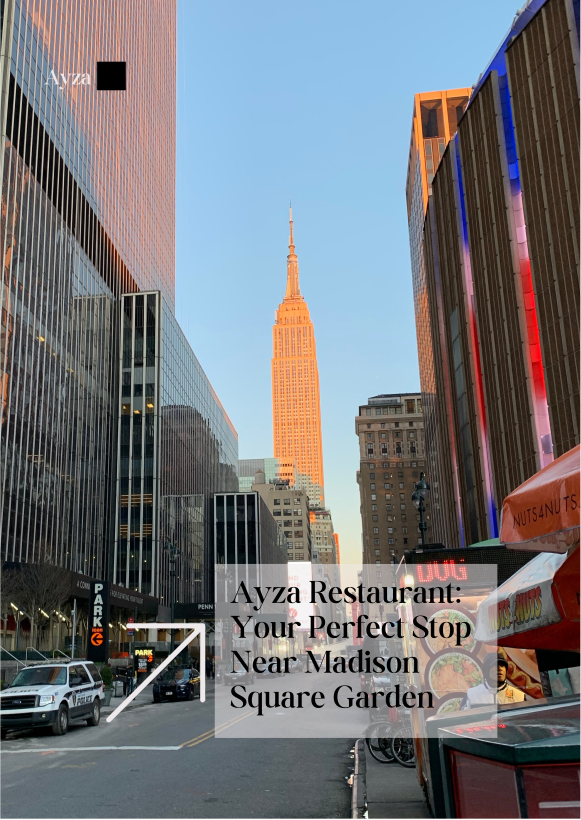
AYZA Wine & Chocolate Bar is a four minute walk from the Empire State Building. Here is the route, what...
Ayza Wine Bar NYC | Wine & Chocolate Bar in Midtown Manhattan


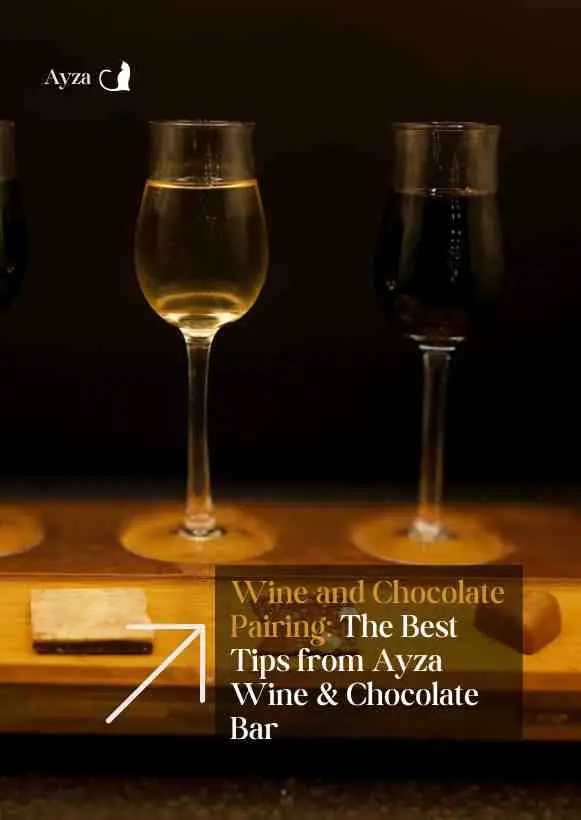
Nearly every attempt at pairing wine and chocolate at home fails the same way: a dry red with a sweet milk chocolate, and both taste worse than they did separately. These wine and chocolate pairing tips exist to prevent exactly that. Five rules, in order of importance, plus a way to test them at your own table for the price of one bar of chocolate.
Quick answer: Keep the wine at least as sweet as the chocolate, match intensity so neither overwhelms the other, treat fillings as the thing you are pairing with, taste in order from lightest to darkest, and let the chocolate melt before you sip. White chocolate wants Moscato or Riesling; milk wants port or a chocolate wine; 70 percent dark and above wants Cabernet Franc, Malbec or Bordeaux.
This is the rule that matters most, and breaking it is behind almost every bad pairing anyone has ever had. Sweetness in food makes a drier wine taste sour, thin and stripped of fruit. It is not a matter of taste; it is how your palate calibrates.
Practically: a dry Cabernet Sauvignon with a sweet milk chocolate is the classic disaster. A ruby port with the same chocolate works, because the port has sweetness of its own to hold its ground. If you are unsure how sweet a wine is, alcohol under about 12 percent often indicates some residual sugar, and anything labelled port, Moscato or late harvest certainly does.
People try to match flavours, hunting for a cherry note in a wine to go with a cherry filling. That is the harder route and it rarely decides anything. Matching weight does.
A delicate white chocolate next to a big Malbec is not a pairing, it is a wine with a distraction. An 80 percent dark chocolate next to a light Pinot Grigio erases the wine entirely. Think of it as volume: both sides should be playing at roughly the same level. Get that right and the flavour details take care of themselves.
A filled bonbon is mostly filling by volume, and that is what your palate registers. A dark shell around a passion fruit centre behaves like a fruit dessert, not like dark chocolate, and pairing it with a big red will fight the acidity in the fruit.
| Filling | Pair with | Why |
|---|---|---|
| Fruit, passion fruit, raspberry | Sparkling or still rosé | Acidity meets acidity |
| Caramel or salted caramel | Ruby port, off dry Riesling | Sweetness matched, salt handled |
| Coffee or espresso | A savoury red, or port | Roast notes echo the wine’s structure |
| Nut, pistachio, hazelnut | Cabernet Franc, medium red | Fat and body in balance |
| Coconut or milk | Riesling with some fruit sweetness | The wine needs sugar of its own |
Lightest to darkest, always. White chocolate first, then milk, then dark, then anything above 70 percent. A single square of very dark chocolate at the start will flatten everything that follows it, and you will spend the rest of the tasting wondering why nothing else has any flavour.
Same principle on the wine side: sparkling, then white, then rosé, then red, then fortified. Water between pairs resets the palate better than bread, and does not add its own flavour to the next one.
Chocolate releases its flavour as the cocoa butter melts at body temperature. Chewing and swallowing skips most of that, which is why a chewed chocolate tastes mainly of sweetness and a melted one tastes of everything else.
Put a small piece on your tongue, let it melt for a few seconds, then take the wine. The pairing happens in the second or third second, not the first. Do this once with a piece you chewed and once with a piece you melted and the difference is obvious immediately.
| Chocolate | Cocoa | Works with | Avoid |
|---|---|---|---|
| White | No cocoa solids | Moscato d’Asti, off dry Riesling, sparkling rosé | Any dry red |
| Milk | Around 30 percent | Ruby port, chocolate wine, off dry white | High tannin reds |
| Dark | 60 to 70 percent | Cabernet Franc, Merlot, softer Bordeaux | Crisp light whites |
| Very dark | 75 percent and up | Malbec, structured Bordeaux, ruby port | Anything delicate |
| Filled bonbons | Varies | Match the filling, usually rosé or sparkling | Oaked, heavy whites |
If you learn one wine from this chart, learn Cabernet Franc. It is medium bodied and savoury rather than jammy, with restrained tannin, which makes it one of the few reds that works across a wide range of dark chocolate. It also happens to be the red New York State does best.
The rules make far more sense once you have tasted a failure on purpose. This takes twenty minutes and needs almost nothing.
That single comparison teaches the sweetness rule permanently, in a way reading about it does not. Write one line about each pair; a month later that line is the difference between remembering that something worked and remembering what it was.
The wine must be at least as sweet as the chocolate. Sweetness in the food makes a drier wine taste sour and thin, which is behind almost every failed pairing.
A medium to full red with restrained tannin. Cabernet Franc, Merlot, Malbec and softer Bordeaux all work, and ruby port works with the very darkest chocolate.
Something with sweetness of its own: ruby port, a chocolate wine, or an off dry white. Avoid high tannin dry reds, which is the classic mistake.
Moscato d’Asti, an off dry Riesling or a sparkling rosé. White chocolate has no cocoa solids, so there is no bitterness to balance, only sweetness.
Lightest to darkest for the chocolate, and sparkling to fortified for the wine. One square of very dark chocolate at the start flattens everything after it.
No. Let a small piece melt on your tongue for a few seconds, then sip. Cocoa butter releases flavour at body temperature, and chewing skips most of it.
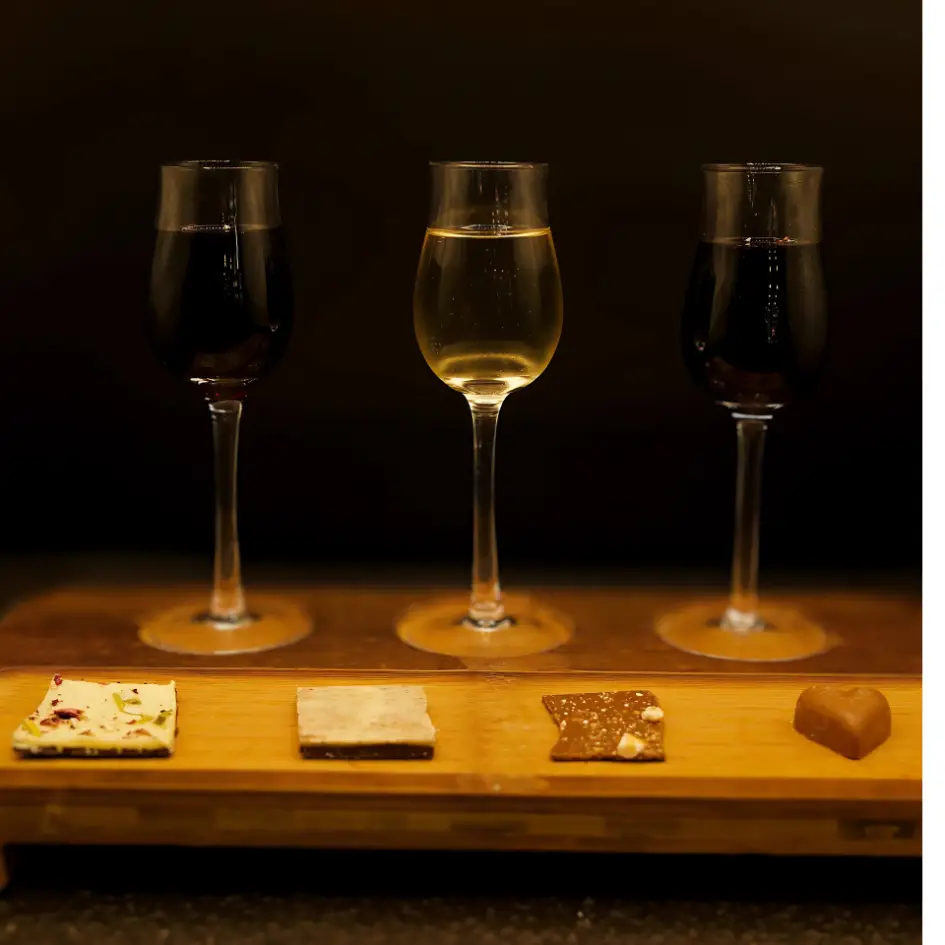
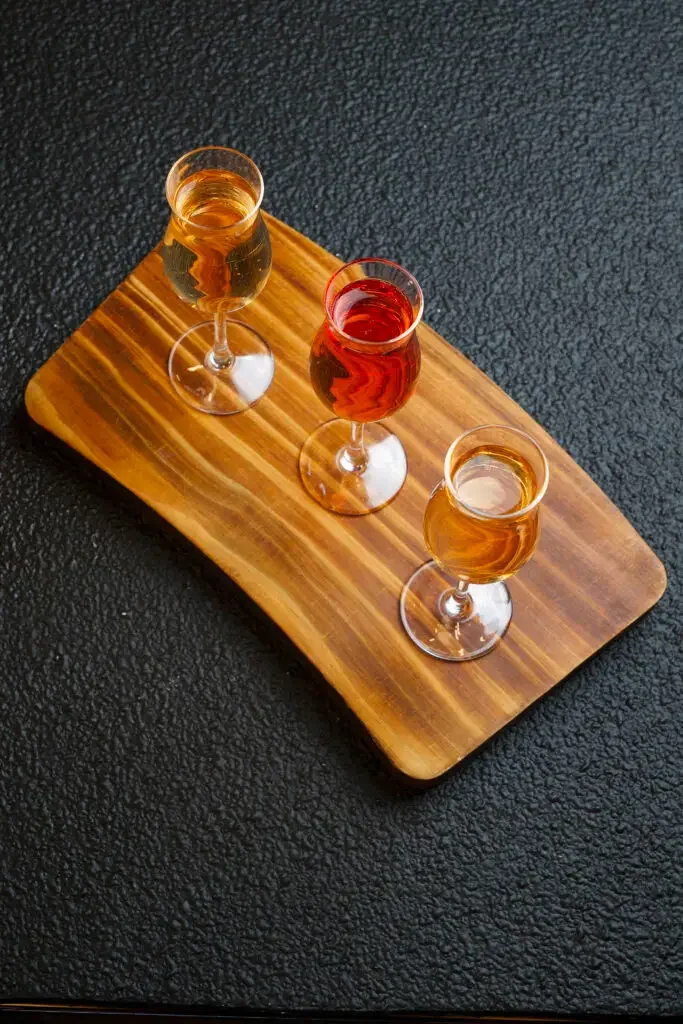
Five wine and chocolate pairing tips get you a long way at home. Tasting a set that somebody has built deliberately gets you the rest. AYZA’s pairing flights run from $29 to $53 on the cocktails and wines menu, all shared for the table, and guided tasting classes run one hour from $59 per person for booked groups.
Pairing flights and prices were checked against ayzanyc.com on September 9, 2026 and rotate over time.