Wine Bar Near Empire State Building: Plan Your AYZA Visit
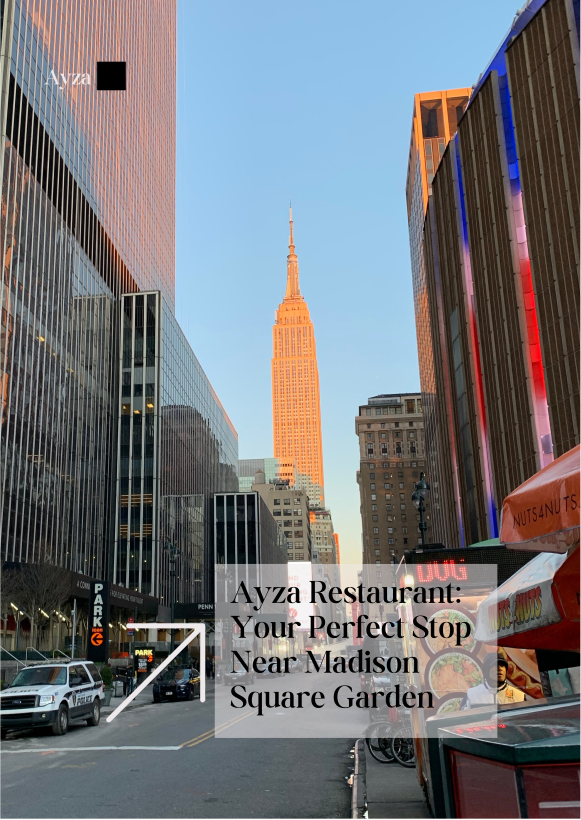
AYZA Wine & Chocolate Bar is a four minute walk from the Empire State Building. Here is the route, what...
Ayza Wine Bar NYC | Wine & Chocolate Bar in Midtown Manhattan


Comparing catering services in New York City is difficult because every quote looks different. One is priced per person, another per platter, a third adds staffing separately and a fourth buries rentals in a line called “equipment”. Until you can put them side by side, you are not comparing caterers. You are comparing spreadsheets.
This guide sets out the seven things that actually differ between caterers, and the questions that force every quote into the same shape.
Quick answer: Check the venue fit and kitchen access first, then permits and food safety, then get every quote itemised into food, staffing, rentals, delivery, service charge and tax. Ask how allergies are handled as a process, not a promise. In New York, budget roughly 30 percent above the per person headline once service and tax are added.
What a caterer can serve is decided by the space long before anybody talks about menus. A venue with no kitchen access rules out anything that needs to be finished hot. A fourth floor walk up rules out heavy equipment. A building with a loading dock that closes at six rules out an evening setup.
Send those answers to every caterer with your first enquiry. A caterer who receives them writes you a realistic quote. One who does not will revise it later, upward.
Ask three direct questions and get the answers in writing: are you licensed and insured, does your team include a certified food protection supervisor, and does this event need any temporary permit given where and how we are serving.
The last one matters more than people assume, particularly for events in public or unconventional spaces. New York City’s health department publishes guidance on temporary food service establishments, and a competent caterer will already know whether it applies to your event. If serving alcohol is involved, establish clearly who holds the licence and who is responsible for it. That should never be you by default.
Ask for a certificate of insurance naming your venue as an additional insured. Most venues require it, and a caterer who cannot produce one quickly has told you something useful.
Insist that every quote is broken into the same lines. This single request does more to reveal differences between caterers than any tasting.
| Line | What to check |
|---|---|
| Food per person | Exactly what is included and how many pieces per guest |
| Staffing | Number of staff, hours, and the hourly rate for overtime |
| Rentals | Glassware, plates, linen, tables, and who collects them |
| Delivery and setup | Travel, loading, setup and breakdown as separate figures |
| Service charge | The percentage, and whether it is a gratuity or an administrative fee |
| Tax | What it applies to, including whether it applies to the service charge |
| Deposit and cancellation | Amounts, dates, and what is refundable when |
One line deserves particular attention: a service charge is not necessarily a tip to the staff. Ask directly whether it is a gratuity or an administrative fee, and whether you are expected to tip on top. The answer varies and the difference at a fifty person event is significant.
A good caterer will steer you away from dishes that do not travel or hold well, and that willingness is a strong signal. Anything fried, anything that has to be plated at the last second, and anything that suffers under a heat lamp is a risk at scale.
On dietary requirements, the question to ask is about process, not intention. Everyone says they can accommodate allergies. Ask instead: how do you prevent cross contact in the kitchen and on the service line, how do plates for guests with allergies reach the right person, and who on your team is responsible for that on the night. A caterer with a real answer will describe a system, including separate preparation and labelled plates. A caterer without one will reassure you.
Then do your part: collect requirements at the RSVP stage and send them by name a week ahead, not as a count. Make the vegetarian and vegan options good enough that other guests order them, which removes the sense of a separate menu entirely.
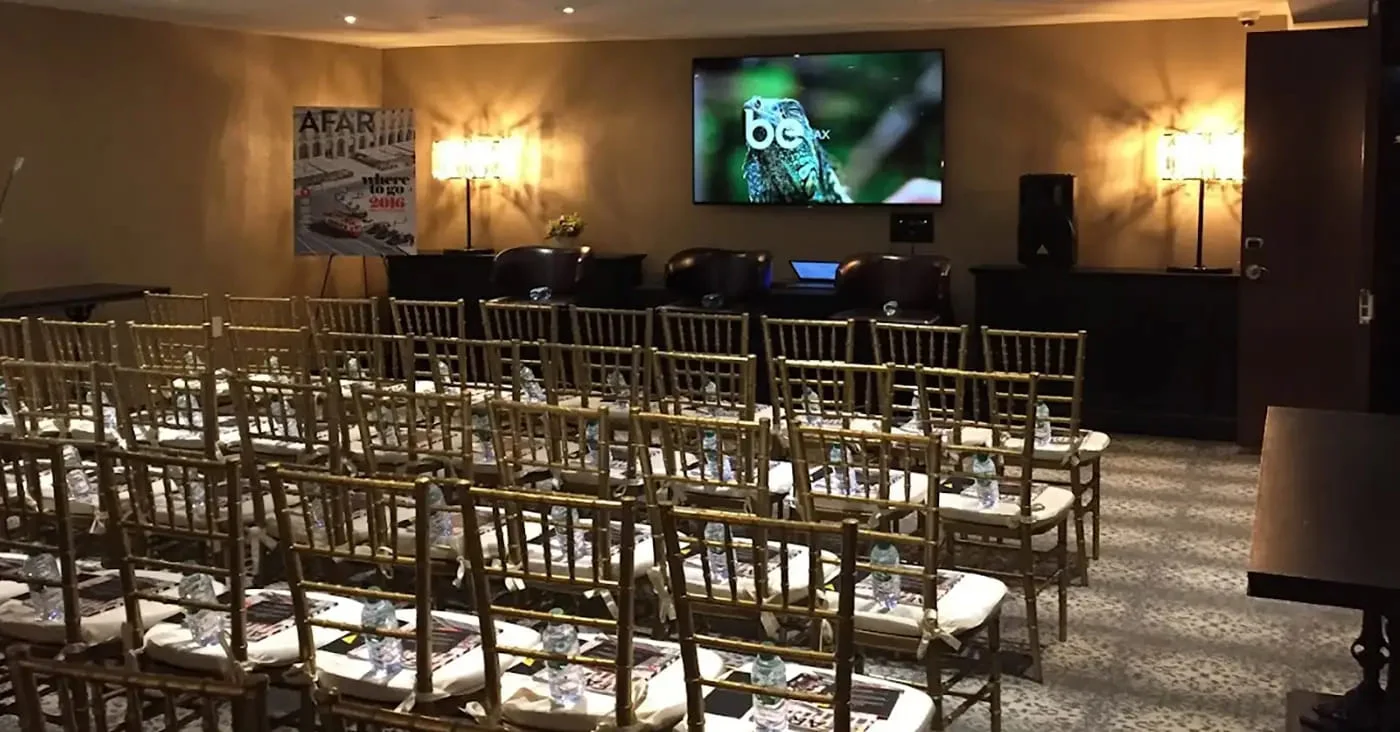
Understaffing is the most common way a good menu becomes a bad event, and it is the easiest line to cut when a caterer is trying to win on price. Ask for the number of staff, their roles, and their arrival and departure times, then sanity check it against your format.
A plated dinner needs meaningfully more service staff than a buffet or a station format, because every course goes out and comes back. A passed canapé reception needs enough people that trays are circulating continuously rather than appearing every ten minutes. A bar needs at least one bartender for every fifty or so guests before queues form, and more at the start when everyone arrives at once.
If one quote is noticeably cheaper than the others, compare the staffing lines before you compare the food. That is almost always where the difference is.
Rentals are where quotes diverge invisibly. Confirm in writing who supplies glassware, crockery, cutlery, linen, tables and chairs, who delivers them, who collects them and when, and what happens if something is broken.
In Manhattan, logistics costs are real and should be visible. Parking and loading, elevator access, stairs, and the time a team spends waiting for a dock are all chargeable. A quote with no logistics line in a building with a difficult delivery route is a quote that will be revised. Ask them to walk you through the delivery plan for your specific address.

Ask whether a tasting is included or charged, and whether the charge is credited against the booking. Both answers are reasonable; not being told is not.
Ask for two references from events of a similar size and format, and actually call them. The question worth asking a reference is not whether the food was good. It is what went wrong and how the caterer handled it, because something always does.
For groups under about forty, hosting at a restaurant removes most of the above. There is no kitchen access question, no rentals, no delivery logistics and no staffing ratio to verify, because all of it is the venue’s problem rather than yours.
As a reference point, private events at AYZA in Midtown start at $69 per person and hold up to 20 seated or 40 standing, with vegan, vegetarian and gluten free accommodations and the option of adding a guided wine tasting from $59 per person. Compare that per person figure against a catered quote for the same headcount, with all the lines included, before deciding which is really cheaper.
Insist every quote is broken into the same lines: food per person, staffing, rentals, delivery and setup, service charge, tax, and deposit and cancellation terms. Differences only become visible in that format.
Ask about process rather than intention: how cross contact is prevented in the kitchen and on the service line, how the right plate reaches the right guest, and who is responsible on the night.
Not necessarily. It can be a gratuity or an administrative fee. Ask directly which it is and whether you are expected to tip on top, because the difference is significant at scale.
Kitchen access and what is in it, delivery entrance and loading times, elevator restrictions, power availability, waste removal, and the setup and breakdown windows.
In New York, roughly 30 percent above the per person food figure once service charge and tax are added, before rentals and logistics.
For groups under about forty, a restaurant usually removes the kitchen access, rentals, delivery and staffing questions entirely. Compare the all in per person cost of both.
Whichever way you go, the request is the same: every line separately, in writing, before you sign. Comparing catering services in New York City is straightforward once every quote is in the same shape.
Venue prices and capacities were checked against ayzanyc.com on September 9, 2026. Permit and licensing requirements are set by New York City; check current guidance for your event.